Most Korean SMEs we meet treat the Vietnam market like an export account: ship a product catalog, hire one local salesperson, wait. Six months later, the pipeline is empty and the headcount is gone. The companies that win are the ones that decide on a channel model first — and only then on people.
Three channel models that actually work
For B2B and mid-market B2C, your realistic choices in Vietnam are:
1. Distributor / partner-led
You sign one to three local distributors who own customer relationships. You provide product, training, and marketing support. Revenue ramps fast — sometimes in the first quarter — because the distributor brings their existing book.
Best for: industrial equipment, FMCG, components, anything that needs after-sales service in 50+ provinces.
The risk: the distributor owns the customer. If they leave, you start from zero. Always negotiate customer-data ownership in the contract.
2. Direct B2B sales team
You hire 2–4 Vietnamese B2B salespeople, give them territory, and run a Korean-style account-based sales motion. Slower to revenue (6–9 months) but you own the relationship and the margin.
Best for: enterprise software, manufacturing services, projects with long deal cycles, anything where the customer wants the principal in the room.
3. Digital-first inbound
Vietnamese-language website + SEO + paid LinkedIn + email outbound. Generates 50–200 qualified leads per month if you commit a budget of $5K–$15K monthly for the first six months.
Best for: SaaS, professional services, HR tech, anything where the buyer researches online before talking to a salesperson.
Pick one of the three for the first 12 months. Companies that try to run all three at once end up doing none of them well. The single biggest predictor of success is how narrow your first-year channel is.
The first 100 leads — playbook
Whichever channel you pick, the first 100 leads tell you whether the model works. Here's the standard 90-day plan we run with clients:
- Week 1–2: Vietnamese-language landing page (not auto-translated — rewritten by a native B2B copywriter)
- Week 2–3: Sales deck and one-pager in Vietnamese, with case studies relevant to Vietnam SMEs (not Korean references)
- Week 3–4: Build the target list: 200–500 named accounts with verified contact data (we use Vietnamese B2B databases + LinkedIn Sales Nav)
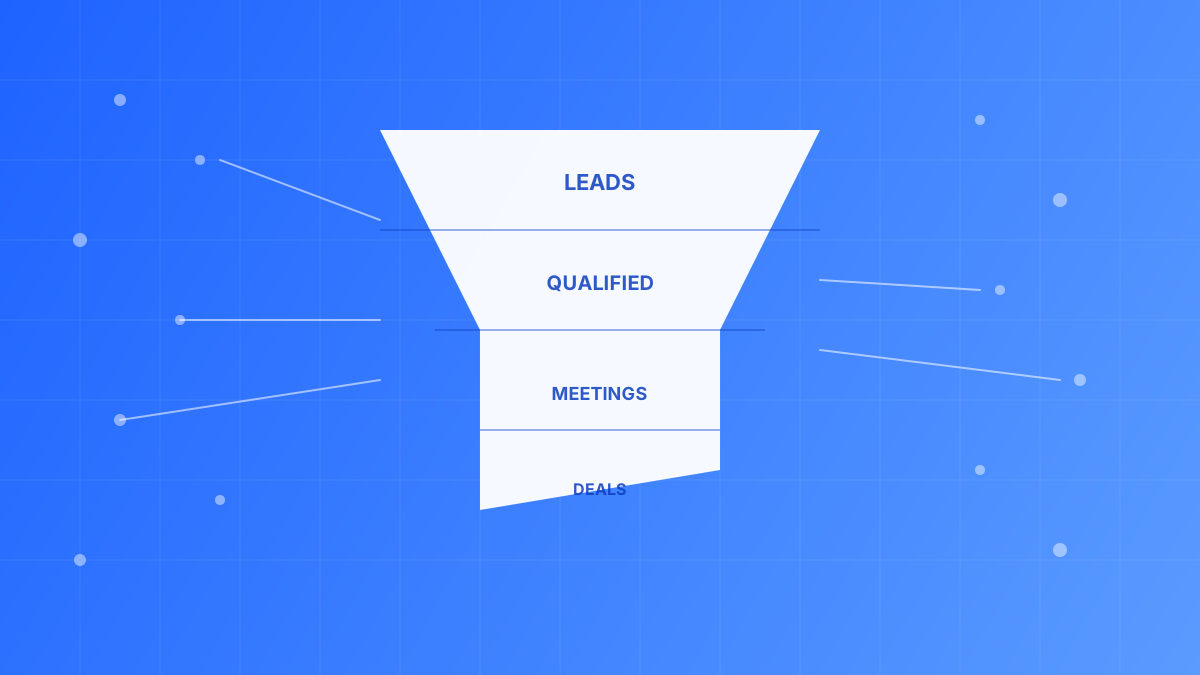
- Week 5–8: First outreach — email sequences in Vietnamese, LinkedIn voice notes, calls. Aim for 10% reply rate, 3% meeting booked.
- Week 9–12: First 20 meetings, first 5 qualified opportunities, first signed deal
Things Korean playbooks do wrong
- Cold-calling without warming up. Vietnamese B2B buyers expect at least one LinkedIn touch before a phone call. Skipping this kills your reply rate.
- Korean-style hierarchical demos. Sending the most senior person to every meeting signals you do not respect the buyer's time. Send a competent SE first.
- Pricing in USD only. Show VND with USD reference. Pricing in USD only triggers "you are not serious about Vietnam" objections.
- Translated marketing. Vietnamese readers spot machine translation in two seconds and lose trust. Always have a Vietnamese native rewrite, not translate.
What good looks like at month 6
- 50+ accounts in active conversation
- 2–5 closed deals (small but real)
- One reference customer willing to do a webinar in Vietnamese
- A clear answer to: which segment buys, which segment ghosts
If you reach month 6 without a reference customer, the channel is not working — change it before month 9 rather than spending another quarter hoping.
Where SotaTek fits
We run the digital infrastructure: the Vietnamese landing page, the CRM (Salesforce, HubSpot, or our own), the email sequences, and the lead-routing automation. We coordinate the local marketing partners for paid campaigns and the B2B databases for outreach lists. The Korean-speaking PM keeps you in the loop in your timezone.
Want a sample 90-day Vietnam sales plan tailored to your sector? Email gateway@sotatek.com.
Build your first revenue channel in Vietnam.
30 minutes with our Korea–Vietnam team. We'll size the right channel for your product and budget.
Book a 30-min Consultation