In 2026, "AI in the factory" is no longer a pilot conversation. Vision QC and predictive maintenance have moved from the demo room to the production line — and the Korean-owned plants in Vietnam that started 18 months ago are now the ones with the lowest defect rates and the highest OEE in their parent groups.
This is a practical map of what AI actually pays back inside a Korean factory in Vietnam, and what to build in what order.
Where AI fits, ranked by payback
1. Vision Quality Control — the obvious win
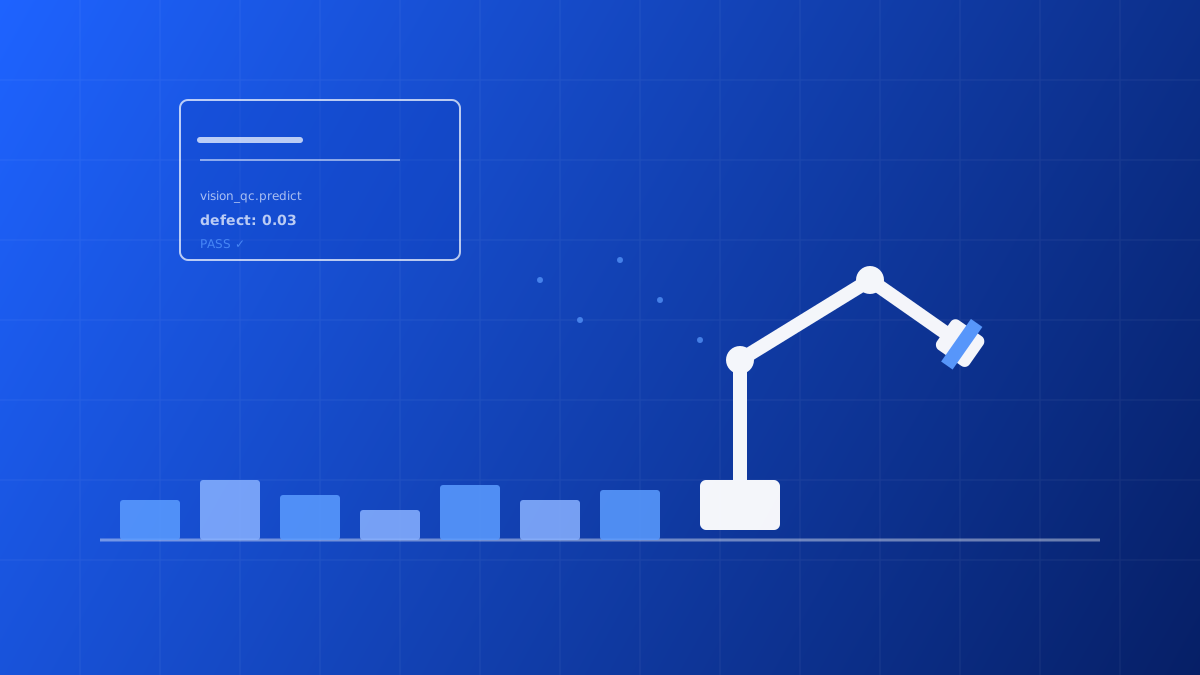
If you have any visual inspection step in your line, this is where you start. A camera over the conveyor, a vision model trained on your defect images, and a rejector arm. Modern models reach 95–98% defect detection vs typical 75–85% for tired human inspectors at end-of-shift.
- Investment: $15K–$40K per line including hardware
- Payback: 4–9 months in most lines we have measured
- What to look for: any defect that costs you a customer return — that is where the math is most obvious
2. Predictive Maintenance on critical machines
Vibration sensors + temperature + an anomaly detection model. The goal is not to predict failures perfectly — it is to catch the 1–2 unplanned stops per quarter that cost you a full day of production each. One avoided stop typically pays for the whole system.
- Best targets: CNC machines, injection molders, presses, anything where unplanned downtime > 4 hours
- Investment: $5K–$15K per critical machine
- Payback: 6–12 months, but lumpy — comes in big chunks when you avoid a major stop
3. Operations chat agent for line leads
Your Vietnamese line leads have questions: "what is the spec for product X?", "where is the SOP for changeover?", "who do I call when machine 3 throws error E412?". A simple RAG agent over your factory documents — in Vietnamese — saves 15–30 minutes per line lead per shift.
- Investment: $20K–$50K one-time, $500/month operating
- Payback: 3–6 months
- Bonus: the agent surfaces tribal knowledge that was previously locked in 2–3 senior staff
4. Demand forecasting and production planning
Useful only if your sales data is clean and your planning cycle is monthly or longer. For Korean OEMs in Vietnam producing for predictable customers, the gain is modest — most of you already have this in the parent ERP. Skip unless you are a multi-customer plant with high SKU complexity.
5. AI-powered safety monitoring
Cameras + a model that detects PPE compliance, restricted-zone entry, near-miss events. Increasingly required for ISO 45001 audits and for some Korean parent group safety standards. Modest direct ROI, but high regulatory and reputational protection.
Pick one line, one defect type, one camera. Ship vision QC in 8 weeks. Measure the rejection rate before/after for 30 days. Use the result to fund the next project. Do not start with a $500K "AI factory transformation" RFP — every one we have seen has stalled at month 9.
The data you actually need
Most Korean factories in Vietnam already have the data — they just have not labeled it:
- Vision QC: 500–2,000 labeled defect images per defect type. If you do not have them, you generate them in week 1 with a Vietnamese annotation team.
- Predictive maintenance: at least 6 months of vibration / temperature data, plus a log of when stops happened. If you do not have sensors yet, install them and wait 3–6 months before training the model.
- Ops chat agent: your existing SOP documents, technical specs, and equipment manuals. Quality of input documents is the #1 predictor of success.
Integration with MES / ERP — don't skip this
An AI system that runs in isolation is a demo. An AI system that writes its decisions into your MES (defect logs, machine status, planned downtime) and pulls context from your ERP (work orders, BOM, customer requirements) is an operational system.
The integration work is usually 30–40% of the project budget. Skipping it is the most common reason AI factory projects get killed at month 12 — they look good in the demo room and disappear from the actual workflow.
Korean-language interface — non-negotiable for the parent
Whatever you build, the dashboards, alerts, and weekly reports need to be available in Korean for the parent group review. We build all our factory AI products with Korean / Vietnamese / English language toggles — your Vietnam plant manager sees Vietnamese, your Seoul HQ sees Korean, the ISO auditor sees English.
Where SotaTek fits
We have shipped vision QC, predictive maintenance, and ops chat in Korean-owned Vietnamese plants across electronics, garment, and components. Korean-speaking PM, Vietnam-based AI engineering team, integrated with the ERP and MES we either built or inherited.
Want a 1-page assessment of which AI use case in your plant has the fastest payback? Email gateway@sotatek.com with your plant size, products, and current QC method — we'll send a 60-minute assessment framework, free.
Make AI pay back in your Vietnam plant.
30 minutes with our manufacturing AI team. We'll size the highest-ROI starting point.
Book a 30-min Consultation